🔥 LIMITED-TIME GRAND OPENING OFFER · FREE STANDARD SHIPPING · DUTIES & TAXES INCLUDED

Product development and quality process
EV Screen Protector Manufacturing & Quality at Autolind
How real-vehicle testing, repeated samples and two-stage inspection shape the screen protectors we are prepared to send to our customers.
Our approach
How We Review EV Screen Protector Manufacturing
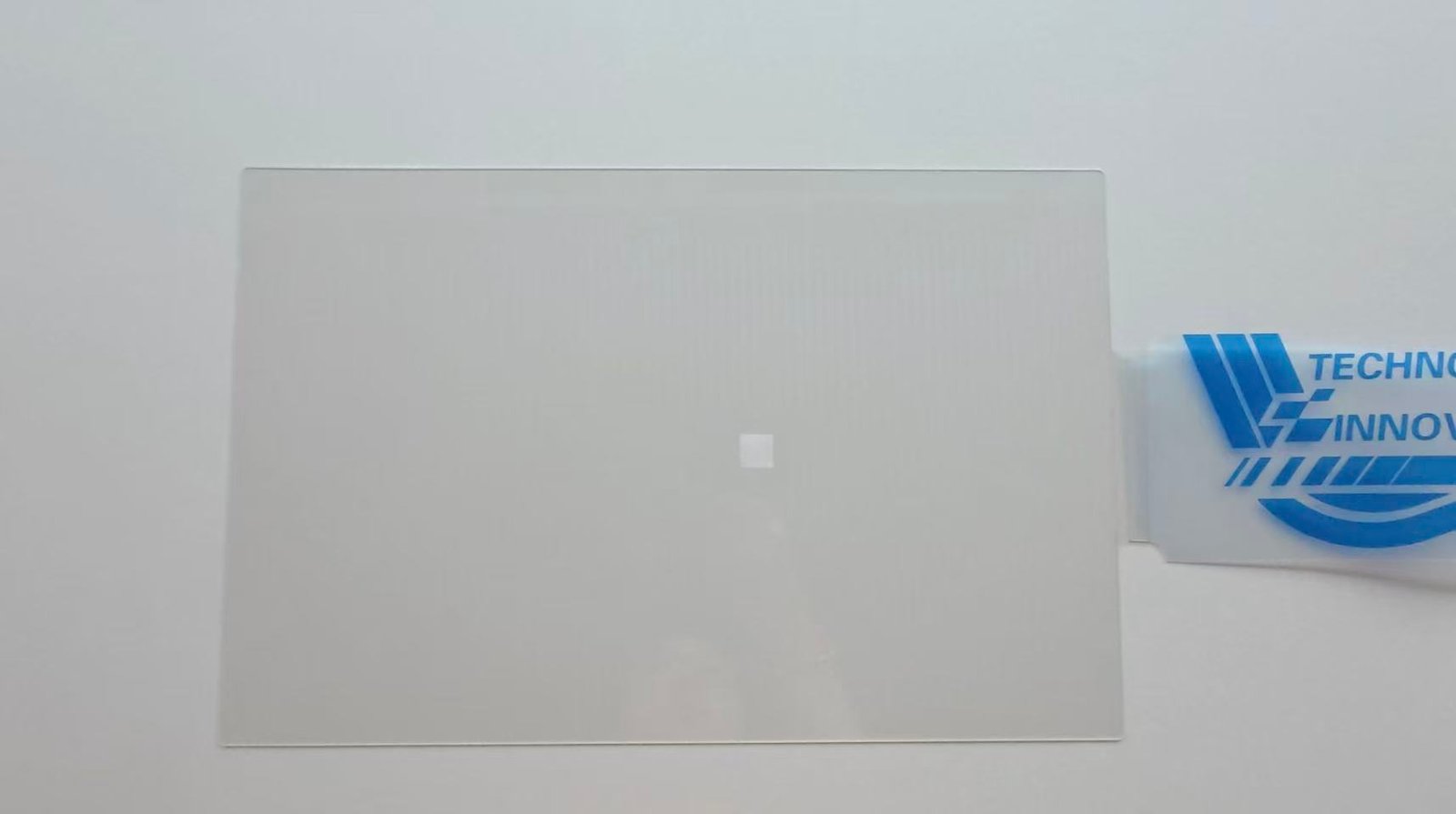
Autolind works with a manufacturing partner in Guangzhou with more than ten years of experience producing screen-protection products. The factory handles specialist manufacturing and full production inspection; our team defines product requirements, tests samples and checks each item again before dispatch.
Material and surface
High-Alumina Glass, Selected for the Display Environment
We selected high-alumina glass as the foundation of our protectors for its balance of clarity, slimness and suitability for strengthened display protection.
Each protector is specified at 0.33 mm and strengthened for six hours. AR and AF surface treatments complete the structure: the AR layer is designed to help manage surface reflections and support light transmission, while the AF layer helps reduce fingerprint and oil buildup and creates a smoother surface that is easier to clean.
0.33 mm
Slim glass layer
Designed to add everyday protection without unnecessary bulk over the original display.
6 hours
Strengthening process
A controlled strengthening stage supports the finished glass structure and 9H-rated surface specification.
AR + AF
Optical surface treatments
Designed to preserve a clear view, support smoother touch and make everyday cleaning easier.
Measured optical performance
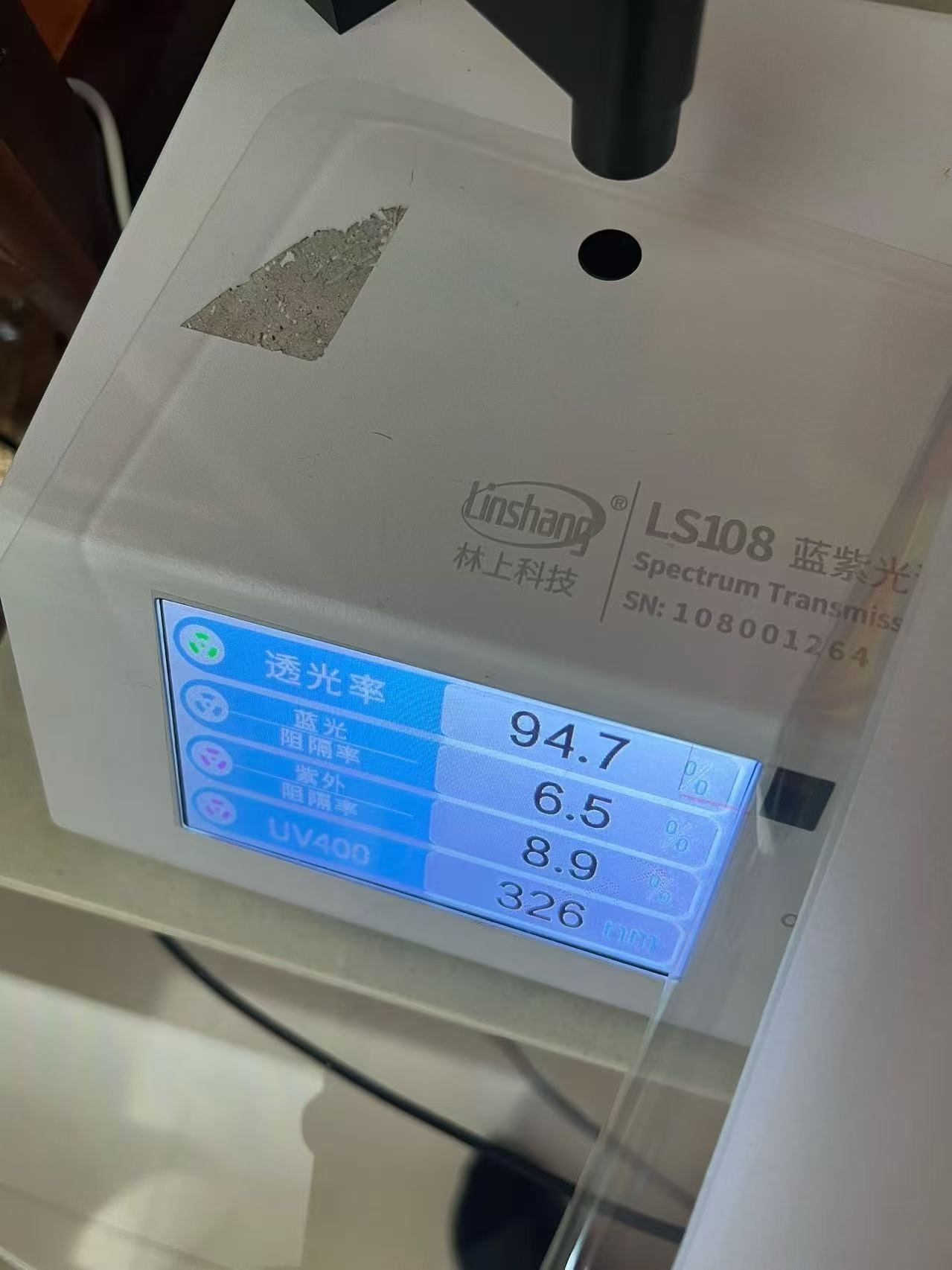
94.7% Measured Light Transmittance
A representative production sample was measured with a Linshang LS108 spectrum-transmission meter. The 94.7% light-transmittance reading supports the clear, bright display experience we wanted from the finished protector.
94.7%
Light transmittance
6.5%
Blue-light blocking reading
8.9%
UV-blocking reading
Readings may vary slightly by product model, batch and measurement conditions. Autolind does not market this product as a high blue-light-blocking or high UV-blocking filter.
A real development example
When the First Adhesive Version Wasn’t Good Enough
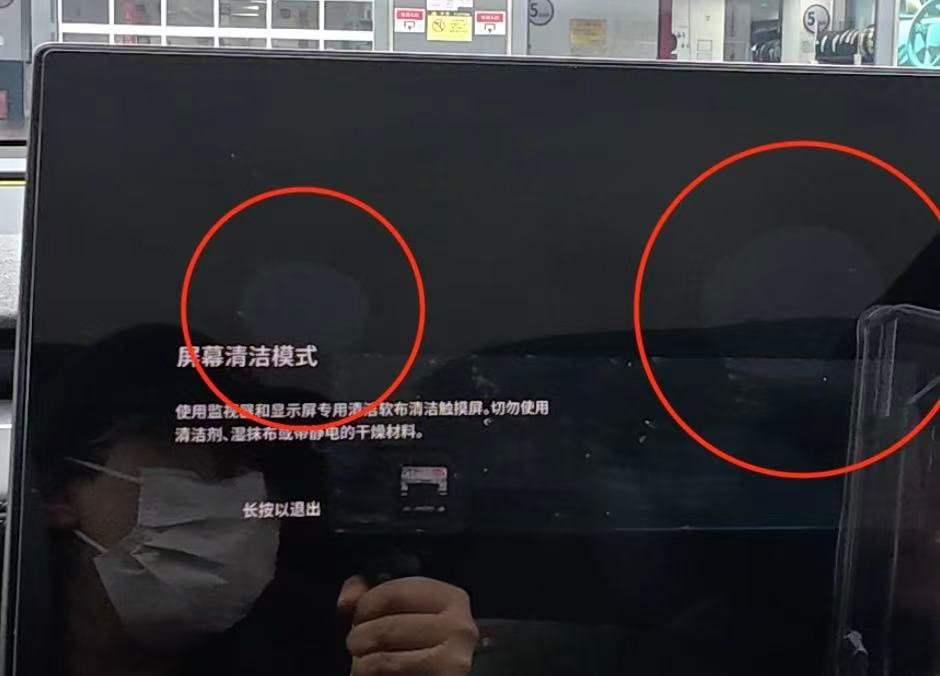
Our first installation samples could leave large air pockets beneath the glass. Instead of accepting the result, we documented what happened and worked through several adjustments with our manufacturing partner.
What changed
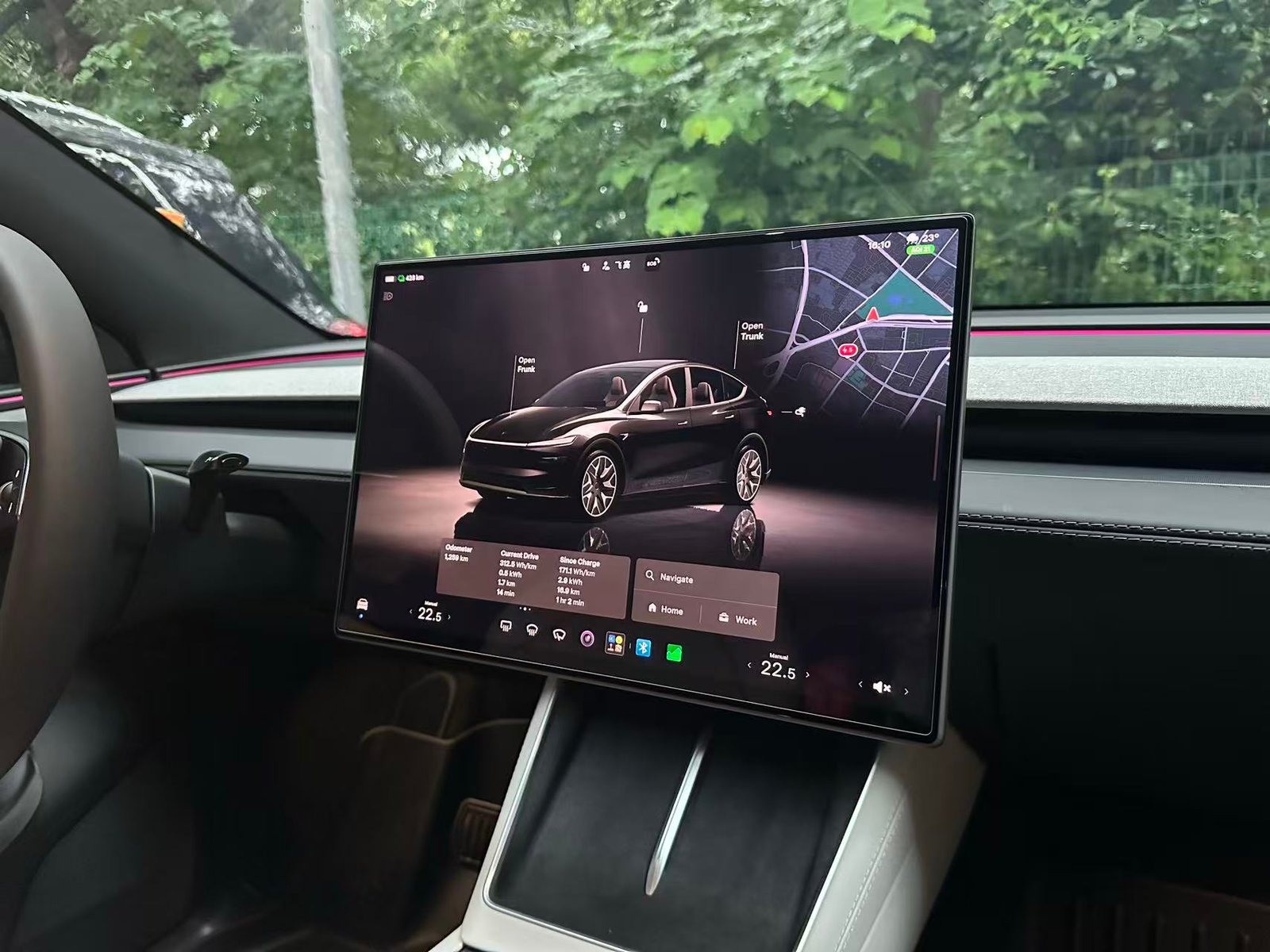
The factory reviewed the installation evidence and produced several revised adhesive versions. The current adhesive specification was developed with our manufacturing partner for Autolind and is governed by our supplier agreement.
Installation technique, dust, temperature and screen condition can still affect the final result. No tempered-glass protector can promise a completely bubble-free installation in every environment, which is why every Autolind product includes a cleaning kit, installation guide and access to a video tutorial.
Fitment details
Small Adjustments That Change the Experience
Approximately 1 mm inset
After studying existing products and common edge-fit issues, we adopted a deliberate inset around the perimeter to help reduce white edges and lifting. The protector is therefore not intended to cover every last millimetre of the display glass.
Polished 2.5D perimeter for Tesla
Our first Tesla samples felt sharper along the edge than we wanted. We asked the factory to add a polished 2.5D perimeter, creating a smoother feel along the entire glass edge. This finish currently applies to confirmed Tesla Model 3 and Model Y products.
Repositioned alignment tray
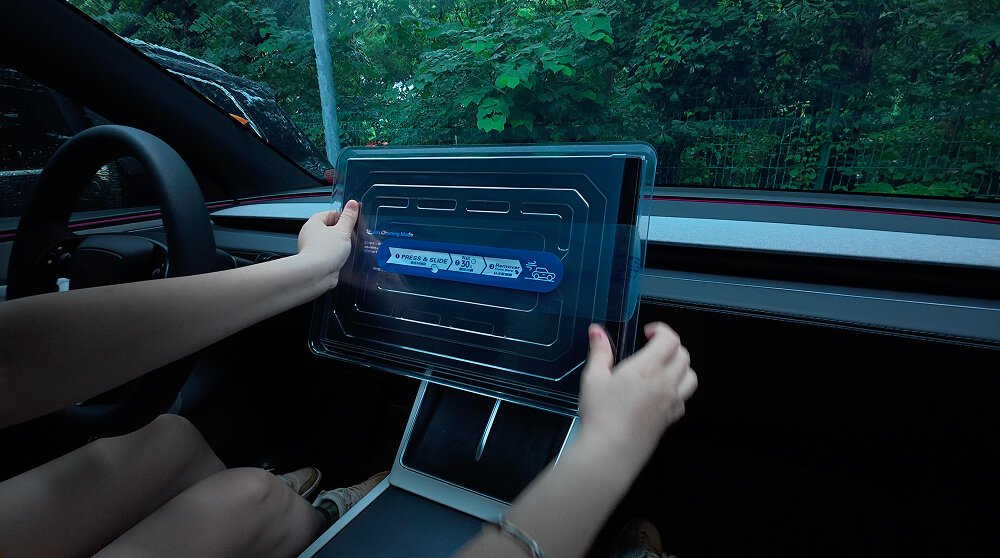
An early tray fitted around the display correctly, but the protector could land slightly too high when released. We reported the offset and tested the revised positioning before approval. The tray is included only with product variants that state it in the package contents.
Two-stage quality control
Checked at the Factory, Then Checked Again by Autolind
The factory performs full QC before the goods leave production. When products reach us in Shanghai, every item is checked again before it is packed for an individual customer.
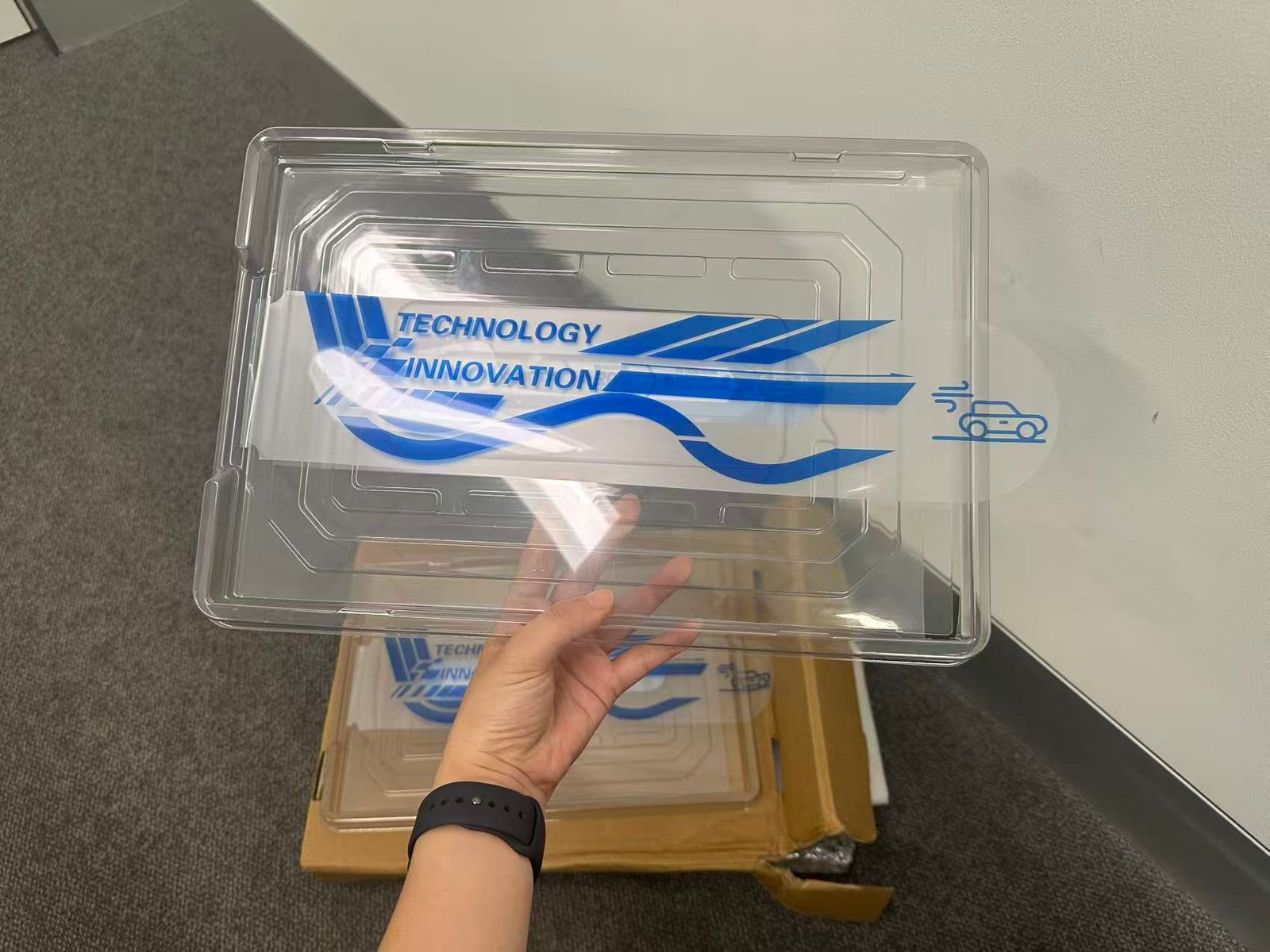
01 · Factory QC
Production inspection
Finished goods are fully checked by the manufacturing partner before release.
02 · Correct variant
Model and size check
We confirm the selected vehicle version and screen-size variant against the order.
03 · Product condition
Visible-condition review
We check the protector, tray where included and packaging for visible issues.
04 · Package contents
Accessories included
We confirm the cleaning kit and installation guide are ready to travel with the product.
Wholesale, OEM and made-to-specification
Need a Different Vehicle, Screen Size or Material Specification?
For suitable business orders, Autolind can discuss custom vehicle fitment, screen dimensions, glass specifications, coatings, packaging and order quantities with our manufacturing partner. Feasibility, lead time and final specifications are confirmed in writing before production.
Technical context
Material and Coating References
For readers who would like more background, the following third-party pages describe general characteristics and applications of high-alumina glass, medium-alumina glass and AF surface-coating technology.
These links provide general technical context. They do not identify the source of Autolind’s glass, establish a supply relationship or indicate endorsement of Autolind by the referenced companies.
Unless specifically identified as an Autolind instrument measurement, material, hardness, thickness and processing values on this page are based on the manufacturing specification provided for the relevant product. Features and package contents may differ by vehicle model and product variant; the individual product page is the controlling description for your order.